
Holistic Wellness Strategy for AI Community Wellbeing: Why the Future of Technology Must Support Human Flourishing

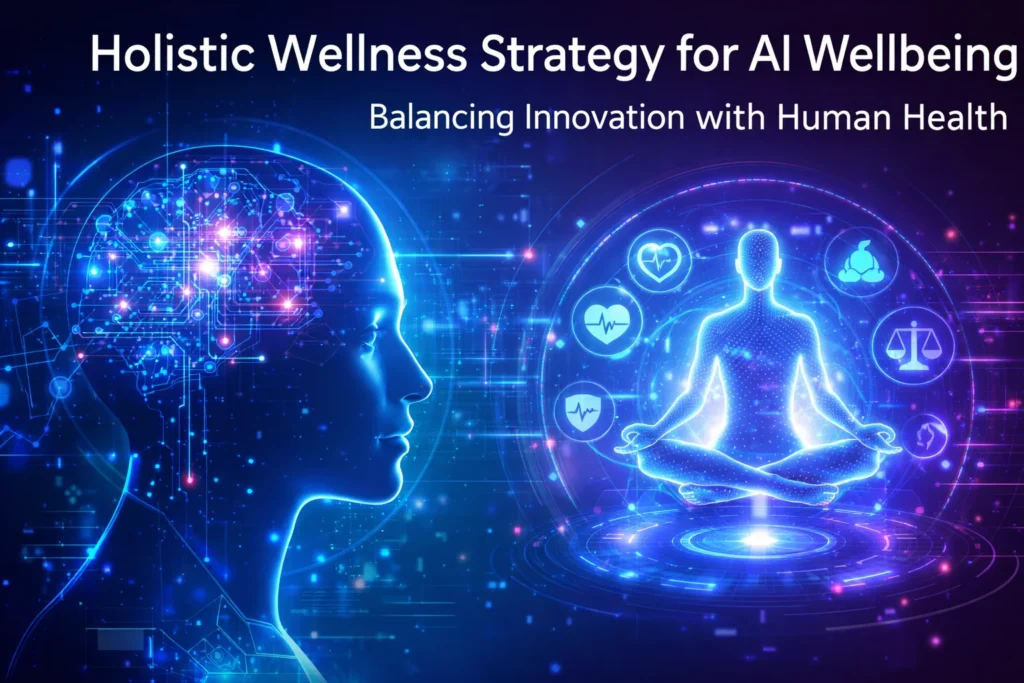
Artificial intelligence is transforming how we work, communicate, build businesses, and make decisions. From automating repetitive tasks to enabling predictive insights at scale, AI has become the backbone of modern innovation. Yet, as adoption accelerates, a critical question is emerging:
Are we building intelligent systems that support human wellbeing or systems that silently erode it?
The rapid expansion of AI-driven workflows has introduced new efficiencies, but it has also intensified digital fatigue, cognitive overload, emotional burnout, and social isolation. For organizations, developers, founders, and AI-driven teams, the challenge is no longer just technological advancement it is sustaining human wellness within an AI-powered world.
A holistic wellness strategy designed specifically for AI communities offers a path forward. Rather than treating wellbeing as an afterthought, this approach integrates mental, emotional, cognitive, social, and ethical health into the fabric of AI adoption and digital collaboration.
This article explores why holistic wellness is essential for AI ecosystems, what it includes, and how organizations can build healthier, more sustainable AI-driven environments.
The Hidden Human Cost of AI Acceleration
AI promises productivity gains, but the speed of digital transformation has created unintended human strain.
Cognitive overload
AI tools increase the volume of information processed daily. Constant dashboards, alerts, analytics, and automated decisions require continuous mental switching and attention management.
Digital fatigue
Remote collaboration platforms, AI assistants, and automated workflows blur boundaries between work and personal life, creating always-on expectations.
Emotional exhaustion
Pressure to keep up with technological change can lead to anxiety, imposter syndrome, and chronic stress among professionals navigating AI-powered environments.
Social disconnection
Automation and asynchronous work reduce organic human interaction, weakening team cohesion and psychological safety.
These challenges are not hypothetical they are emerging realities across tech companies, AI startups, digital agencies, and enterprise innovation teams.
Why AI Communities Need a Holistically Designed Wellness Strategy
Traditional workplace wellness programs often focus on physical health perks or occasional mindfulness sessions. However, AI-powered work environments require a more integrated, systemic approach.
A holistic wellness strategy acknowledges that:
✔ mental clarity drives better decision-making
✔ emotional resilience supports innovation
✔ cognitive balance prevents burnout
✔ ethical alignment builds trust in AI systems
✔ social connection improves collaboration and creativity
Organizations that ignore these factors risk burnout, turnover, decreased innovation, and reduced long-term productivity.
By contrast, organizations that embed wellness into their AI culture cultivate sustainable performance and human-centered growth.
What Holistic Wellness Means in an AI-Driven Ecosystem
Holistic wellness in AI communities is multidimensional. It addresses the full spectrum of human experience in technology-rich environments.
1. Cognitive Wellness: Protecting Focus and Mental Clarity
AI tools can overwhelm users with data and decision inputs. Cognitive wellness practices help individuals maintain clarity and avoid mental overload.
Key strategies:
-
structured digital workflows
-
AI-assisted prioritization rather than constant alerts
-
focused work intervals and deep work cycles
-
reducing decision fatigue through intelligent automation
When cognitive load is managed effectively, productivity increases without sacrificing mental health.
2. Emotional Wellness: Building Resilience in Rapid Innovation Cycles
The pressure to adapt to emerging technologies can create emotional strain.
Supportive practices include:
-
psychologically safe team environments
-
open discussions around stress and uncertainty
-
leadership transparency during technological transitions
-
resilience training and emotional intelligence development
Emotionally supported teams are more adaptable, creative, and engaged.
3. Digital Wellness: Creating Healthy Technology Boundaries
AI-driven environments often promote continuous connectivity. Without boundaries, this leads to exhaustion.
Healthy digital habits include:
-
asynchronous communication norms
-
defined response-time expectations
-
protected offline recovery time
-
mindful AI notifications instead of constant interruptions
Digital wellness ensures technology enhances life rather than dominating it.
4. Social Wellness: Preserving Human Connection in Automated Workflows
Automation reduces routine collaboration, but human connection remains essential for innovation.
Organizations can foster social wellness through:
-
intentional team interaction rituals
-
collaborative problem-solving sessions
-
virtual and in-person connection opportunities
-
recognition systems that celebrate human contribution
Strong social bonds improve morale, trust, and collaboration efficiency.
5. Ethical Wellness: Aligning AI Development with Human Values
AI systems influence decision-making, hiring, healthcare, finance, and governance. Ethical wellness ensures technology development aligns with human dignity and fairness.
Core ethical priorities include:
-
transparency in AI decision processes
-
bias detection and fairness monitoring
-
human oversight in critical decisions
-
responsible data usage practices
Ethically grounded AI ecosystems build trust among users and communities.
The Business Case for AI Community Wellbeing
Holistic wellness is not merely a moral initiative it is a strategic advantage.
Organizations that prioritize wellbeing benefit from:
✔ increased innovation and creativity
✔ improved retention and reduced burnout
✔ stronger decision-making clarity
✔ enhanced collaboration and trust
✔ long-term sustainable productivity
Research consistently shows that mentally healthy teams outperform stressed teams in creativity, adaptability, and problem-solving all essential qualities in AI-driven environments.
Implementing a Holistic Wellness Strategy in AI Organizations
Transitioning to a wellness-centered AI culture does not require radical disruption. Instead, it involves intentional integration.
Step 1: Assess Digital Stress & Workflow Friction
Evaluate where employees experience overload, confusion, or unnecessary complexity.
Step 2: Redesign AI Workflows Around Human Energy
Optimize automation to reduce mental strain rather than increase cognitive burden.
Step 3: Establish Healthy Communication Norms
Create policies that prevent always-on expectations and support deep work.
Step 4: Train Leaders in Human-Centered Technology Management
Leadership behavior shapes workplace wellness culture.
Step 5: Embed Ethical AI Practices
Ensure transparency, fairness, and accountability in AI-driven decision systems.
Step 6: Encourage Recovery & Renewal Cycles
High performance requires periods of rest, reflection, and mental reset.
The Role of Weallth.ai in Supporting AI Community Wellbeing
As AI becomes embedded in everyday work and life, platforms like Weallth.ai are positioned to support a more human-centered technological future.
Weallth.ai focuses on integrating measurable wellness insights, behavioral intelligence, and data-driven wellbeing strategies that help individuals and organizations thrive in high-performance digital environments.
By combining wellness science with technology-driven insights, organizations can:
-
improve resilience and cognitive performance
-
monitor wellbeing trends across teams
-
support sustainable productivity
-
build healthier digital ecosystems
The future of AI success is not defined by speed alone it is defined by sustainability and human flourishing.
The Future of AI Must Include Human Well-Being
As artificial intelligence continues to reshape society, the conversation must evolve beyond efficiency and automation.
The next frontier of innovation is not simply smarter systems it is healthier humans working alongside them.
Holistic wellness strategies ensure that AI communities remain creative, resilient, ethically grounded, and socially connected.
Organizations that invest in human wellbeing today will lead tomorrow’s AI-powered world with clarity, purpose, and sustainable growth.
Because in the age of intelligent machines, human wellbeing is the ultimate competitive advantage.


Responses